Overwhelmed by your chaotic day? How music streaming reordered my life
Have you ever felt like your day is slipping through your fingers? Between work, chores, and endless notifications, life can feel fractured. I used to lose focus every time my rhythm broke—until I discovered how music streaming could anchor my moments. It wasn’t about playlists; it was about designing my day. Now, even in 10-minute gaps, I find clarity, energy, and calm. Let me show you how something as simple as pressing play changed everything.
The Chaos of Modern Daily Life
Most days, it feels like we’re not living—we’re reacting. The alarm goes off, and before your feet even hit the floor, your mind is already three steps ahead: Did I reply to that email? Is there anything for dinner? What time is the school pickup? By 9 a.m., you’ve already made twenty decisions, none of which were about what you truly wanted for your day. I used to float from task to task, pulled by urgency but never quite present. I’d start folding laundry, then answer a text, then remember the grocery list, only to come back and realize I’d put the towels in the wrong pile—again.
It wasn’t laziness. It wasn’t lack of effort. It was the absence of rhythm. Our brains thrive on patterns, on predictable transitions that signal what comes next. Without those cues, we operate in survival mode—constantly scanning, switching, and resetting. That mental whiplash is exhausting. I noticed it most in the afternoons, when the kids were loud, the kitchen was messy, and I just wanted to disappear into the couch. But the truth is, the chaos wasn’t in the tasks—it was in the space between them. The gaps where I had no structure, no signal to shift gears. That’s when I started wondering: what if I could build invisible bridges between my moments?
I wasn’t looking for a productivity hack. I didn’t want another app that promised to fix my life. I just wanted to feel more like myself during the day, not like a server constantly processing requests. And then, almost by accident, I found it in something I’d always taken for granted—music. Not as entertainment, but as a kind of quiet architecture for my time. It started with one simple change: instead of turning on the news or scrolling while I got ready, I pressed play on a playlist I loved. And something shifted. I wasn’t just moving faster—I was moving with purpose.
Music as an Invisible Daily Framework
For years, I thought of music as decoration. Something nice to have, but not essential—like candles or fresh flowers. I’d play it when I remembered, or when the kids asked for songs in the car. But I never considered it a tool. Then I read about how athletes use music to prime their focus, or how surgeons listen to steady beats during long procedures. That’s when it clicked: music isn’t just emotional—it’s functional. It shapes our internal state. And with streaming, that power is available to anyone, anytime.
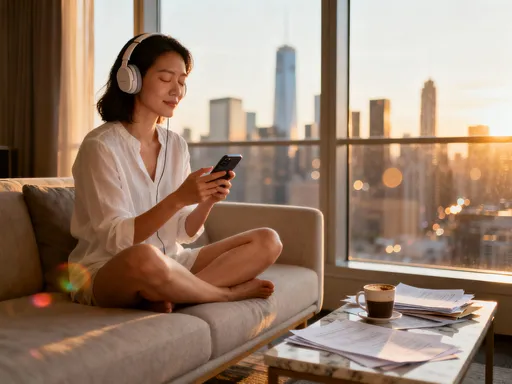
I started experimenting. I created a morning playlist with warm, steady rhythms—nothing too fast, nothing jarring. Songs that felt like sunlight pouring into a room. I played it while making coffee, getting dressed, packing lunches. At first, it felt a little silly, like I was pretending to be in a movie montage. But within days, something surprising happened: I noticed I wasn’t rushing as much. My movements felt smoother. I wasn’t checking my phone the second I walked into the kitchen. The music became a signal: this is the start of the day. It’s not time to react yet. It’s time to arrive.
Later, I added a midday focus playlist—gentle instrumentals with just enough momentum to keep me moving. I played it during my work blocks, and suddenly, the endless email chain didn’t feel quite so overwhelming. The music didn’t do the work for me, but it created a bubble where I could do it without drowning. And in the evenings, I switched to something slower—soft piano, acoustic guitar, songs with long pauses between notes. That playlist became my off-ramp from the day. It didn’t erase stress, but it gave me a way to transition out of it, instead of crashing into bedtime with my mind still racing.
What I realized is that our brains respond to cues—visual, auditory, even habitual. A red light stops us. A dinner bell makes us hungry. Music can do the same thing. It’s not magic. It’s neuroscience. When we hear a familiar beat or melody tied to a certain activity, our brain begins to anticipate what comes next. That’s why, now, when my morning playlist starts, my body knows: it’s time to breathe, to move, to begin. I don’t have to decide. I just follow the sound.
Designing Playlists That Match Your Natural Rhythms
Once I saw music as a framework, I stopped skipping songs just because they weren’t my favorite. Instead, I started asking: what does this moment need? Not what do I want to hear, but what will help me move through this task with more ease? That shift changed everything. I began building playlists not for enjoyment alone, but for function. I made a high-energy mix for cleaning—upbeat pop and dance tracks that made scrubbing the bathroom feel less like a chore and more like a mini dance party. I didn’t have to force myself to start. I just pressed play, and my body followed.
For focused work, I discovered lo-fi beats—those mellow, repetitive instrumentals with a steady drum pattern. At first, I thought they sounded boring. But I tried them during a long writing session, and within minutes, I noticed I wasn’t checking my phone. The rhythm was subtle, but it created a kind of mental guardrail, keeping me on track. It wasn’t about blocking out the world—it was about giving my brain a steady pulse to lean into. And when I needed a reset—a coffee break, a moment between calls—I turned to ambient playlists: soft synth pads, nature sounds, music that felt like a deep breath. These weren’t songs to sing along to. They were spaces to rest in.
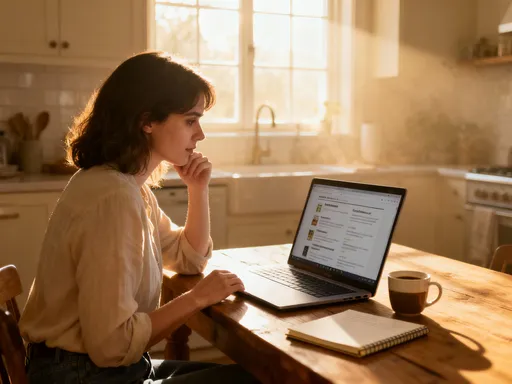
The key was intention. I stopped leaving music to chance. I stopped relying on shuffle mode to surprise me. Instead, I became the designer of my own sonic environment. I’d spend ten minutes on a Sunday evening organizing my playlists for the week—morning energy, deep focus, transition calm, evening unwind. It wasn’t about perfection. Sometimes I’d add a song that didn’t quite fit, or remove one that felt off. But over time, these playlists became trusted companions. They knew my pace. They matched my energy. And because they were personal, they worked in a way generic background music never could.
You don’t need to be a DJ or a music expert. You just need to pay attention to how different sounds make you feel. Try this: next time you’re folding laundry, play something upbeat. Notice if you move faster, if your mood lifts. Then try a quiet instrumental while reading or journaling. See if it helps you stay present. The goal isn’t to build a perfect library—it’s to create tools that help you move through your day with more flow.
Using Smart Features Without Becoming a Tech Expert
I’ll be honest—I’m not tech-savvy. I don’t understand algorithms, and I don’t want to. But I’ve learned that you don’t need to. Streaming platforms are designed to work quietly in the background, supporting your life, not complicating it. The beauty is in the simplicity. You don’t have to build every playlist from scratch. You don’t have to search for songs every morning. The technology learns from you, gently, over time.
One of my favorite tools is the “Daily Mix.” I used to think it was just for discovery—new songs I might like. But I started playing Mix 1 every morning, and something interesting happened: it began to feel familiar. The same core songs would appear, surrounded by slight variations. It became my reliable morning companion—comforting, consistent, but never stale. I didn’t have to think. I didn’t have to choose. I just pressed play, and it knew me. That’s the power of smart features: they reduce decision fatigue. And in a day full of choices, that’s priceless.
Another game-changer was offline downloads. I used to lose connection on my commute, or when walking between errands. Now, I download my key playlists each week. It takes two minutes, and it means I never face that frustrating “no signal” message when I need music most. It’s a small thing, but it keeps the rhythm going. Even when life is unpredictable, my soundtrack stays steady.
And I use auto-play sparingly—but wisely. I let it run during long tasks, like meal prep or deep cleaning, so I don’t have to pause and pick a new song. But I turn it off for moments I want to be intentional—like my evening wind-down. That way, the music supports my flow without taking over. The goal isn’t to let technology control your day, but to let it quietly hold space for you. You’re still in charge. You’re just using tools that make staying on track easier.
Finding Focus in the In-Between Moments
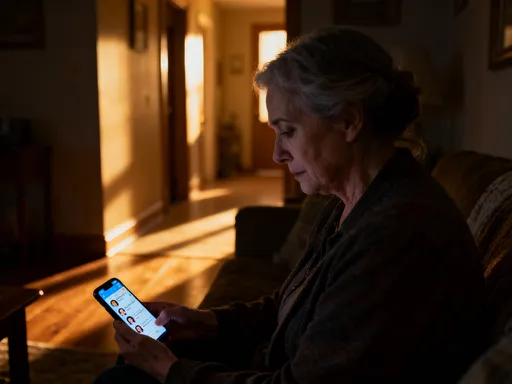
Life doesn’t happen in neat, three-hour blocks. It happens in the cracks—the 12 minutes waiting for the oil change, the 8 minutes standing in line at the pharmacy, the walk from the car to the office. These slivers used to drain me. I’d pull out my phone, scroll mindlessly, and end up more tired than when I started. I’d feel like I’d wasted time, even though I hadn’t done anything with it.
Then I started treating these moments differently. I created a “Micro Reset” playlist—short, calming tracks that last about five to ten minutes. When I’m in line or waiting, I put in my earbuds and press play. No scrolling. No emails. Just music. It’s not about doing more. It’s about being present in the pause. And what I’ve found is that these tiny moments of intention add up. Instead of feeling scattered, I feel reset. Instead of drained, I feel centered.
I also made a “Power Sprint” playlist for quick tasks. Ten songs, ten minutes, high energy. When I need to tidy up before guests arrive or finish a last-minute errand, I play it and race the clock. It turns stress into play. And because it’s time-bound, I don’t overdo it. When the playlist ends, I stop. No guilt, no pushing. Just completion.
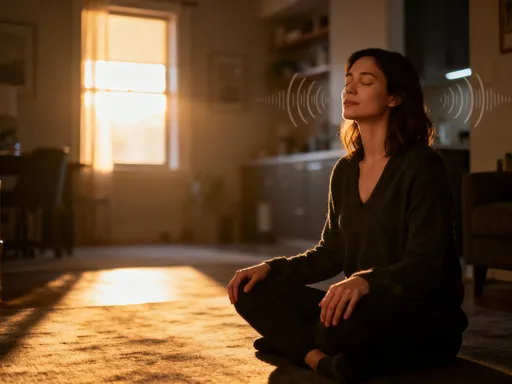
The magic of these micro-moments isn’t in the music itself—it’s in the boundary it creates. That five-minute song becomes a container. It says: this time is yours. You don’t have to solve anything. You don’t have to plan. You just have to be here. And in a world that demands constant output, that’s a radical act of self-care.
Sharing Rhythm Across Households and Relationships
I’ll admit—I was nervous when I first started using music more intentionally. My partner joked that I was building a personal bubble, shutting him out. And honestly, there were moments when I did. I’d put on headphones during dinner prep and miss his questions. But instead of letting music divide us, we found a way to let it connect us.
We started small. I invited him to help me build a “Cooking Together” playlist—songs we both loved, upbeat enough to keep us moving but familiar enough to sing along to. Now, when that playlist plays, it’s not just background noise. It’s a signal: this is our time. We chop vegetables in rhythm, laugh at off-key harmonies, and actually talk instead of just exchanging to-do lists. The music doesn’t replace conversation—it creates space for it.
We made another playlist for our weekend drives—longer songs, nostalgic tracks from our early years. At first, we’d argue about what to play. Now, we take turns picking the mood. Sometimes it’s energetic, sometimes it’s quiet. But the act of choosing together has become its own kind of intimacy. We’re not just sharing a car. We’re sharing a feeling.
Even our kids got involved. We made a “Morning Launch” playlist for school days—fun, fast songs that help them move without resistance. No more yelling about forgotten shoes or slow breakfasts. Just music that says: it’s time to go. And at bedtime, we play a soft, slow mix that helps everyone wind down. The house gets quieter, not because we’re enforcing silence, but because the music guides us there.
Technology often gets blamed for pulling families apart. But in our home, music streaming has done the opposite. It hasn’t replaced connection—it’s become a new language for it. We don’t have to talk all the time to feel close. Sometimes, we just need to listen to the same beat.
Building a Sustainable, Personalized Routine
This isn’t about perfection. Some days, I forget to play my morning playlist. Some days, I skip the micro resets and scroll anyway. And that’s okay. The point isn’t to create a rigid system. It’s to build a rhythm that bends with you, not against you. Over time, these small choices—pressing play, choosing a playlist, pausing with intention—have reshaped my days in ways I never expected.
I’m not more productive because I’m working harder. I’m more focused because I’m less frazzled. I’m calmer because I’ve given myself permission to pause. And I feel more in control not because I’ve done more, but because I’ve learned to move with my day, not against it. The music didn’t change my schedule. It changed my relationship with time.
What I love most is that this isn’t complicated. It doesn’t require a new gadget or a big investment. It just asks for a little attention—ten minutes to build a playlist, one tap to start it, a willingness to let sound guide you. And the return? More energy. More presence. More moments that feel like yours.
If you’re feeling overwhelmed, I’m not going to tell you to meditate for an hour or overhaul your entire routine. I’m going to ask you to try one thing: pick one moment in your day—a morning ritual, a work block, a quiet pause—and give it a soundtrack. Choose three songs that match how you want to feel. Press play. See what happens. You might be surprised how such a small act can create such a big shift. Because sometimes, the simplest tools—like a song at the right time—can help us find our way back to ourselves.