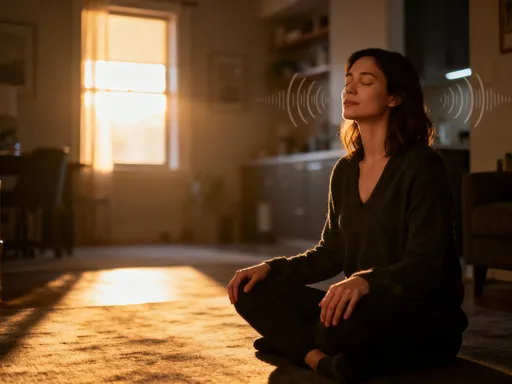
From Overwhelmed to Centered: How Meditation Music Apps Quiet the Chaos Within
Life moves fast — deadlines pile up, notifications never stop, and your mind feels like a browser with 100 tabs open. You’re not alone. Between managing the household, staying on top of work, and trying to carve out even ten minutes for yourself, it’s easy to feel like you’re running on empty. But what if just five minutes a day could reset your mood, sharpen your focus, and help you feel like *you* again? Meditation music apps offer more than relaxation — they’re quiet tools for real personal growth, blending soothing sounds with smart design to meet you exactly where you are. They don’t ask for much, but what they give back? Peace. Clarity. A little more space to breathe.
The Noise Around Us (And Inside Us)
Let’s be honest — life doesn’t slow down just because you’re tired. The alarm goes off, kids need breakfast, emails are already piling up, and before you’ve even poured your coffee, your brain is already three steps ahead — worrying about what you might forget, replaying yesterday’s awkward conversation, or mentally drafting that text you’re not sure you should send. This constant mental chatter isn’t just exhausting — it steals your presence. It pulls you out of the moment when your daughter tells you about her drawing or when your partner asks how your day was. That inner noise, the one that hums beneath everything, can make even quiet moments feel loud.
And it’s not just in your head — the world around us is designed to keep us buzzing. Phones vibrate, social media scrolls endlessly, and the news feels heavier every day. For many of us, especially those juggling family, work, and personal dreams, it’s hard to find a true pause. We’ve normalized being overwhelmed, as if running on stress is just part of being a ‘good mom’ or a ‘reliable employee.’ But here’s the truth: you don’t have to earn calm. You don’t need a weekend retreat or an hour of silence to deserve a moment of peace. What you need is something simple, accessible, and kind — something that meets you right in the middle of the mess.
That’s where meditation music apps come in — not as luxury extras, but as everyday allies. They’re not about escaping life, but about returning to it with more clarity and care. Think of them as a soft hand on your shoulder, gently reminding you: ‘It’s okay to slow down. You’re still here. You still matter.’ And the best part? They don’t require any special skills, extra time, or perfect conditions. Just a few minutes, your phone, and the willingness to listen.
Beyond Background Noise: What These Apps Actually Do
You might think meditation music apps are just playlists of calming tunes — soft piano, ocean waves, maybe some gentle chimes. And yes, they *do* play beautiful music. But they’re so much more than background noise. These apps are carefully designed with intention, using sound in ways that actually shift how your brain works. You don’t need to understand the science to benefit from it — just like you don’t need to know how a microwave heats food to enjoy a warm meal. But knowing a little can help you trust the process.
For example, some tracks use something called binaural beats. Don’t let the name scare you — it’s not complicated. It means playing slightly different tones in each ear, which your brain blends into a rhythm that can help you focus, relax, or even fall asleep faster. It’s like a gentle nudge to your nervous system: ‘Hey, it’s okay to slow down now.’ Other tracks layer natural sounds — rain, forest birds, distant thunder — in a way that mimics how we’ve evolved to feel safe. These aren’t random choices; they’re based on how our brains respond to rhythm, pitch, and pattern.
Take Sarah, a mom of two who works part-time from home. She used to feel scattered every afternoon, struggling to focus after lunch. Then she tried a 10-minute focus session with light ambient music and a subtle rhythmic pulse. She wasn’t meditating in the traditional sense — no cross-legged posture or chanting — just sitting quietly, eyes closed, letting the sound guide her attention. And something shifted. She finished her report faster, with less mental strain. It wasn’t magic — it was music helping her brain find its rhythm again.
Or consider Maria, who used to lie awake for hours, her mind racing with everything she needed to do the next day. She started using a bedtime track with slow, breath-synchronized music — a gentle piano melody that matched the pace of deep breathing. Within a few nights, she noticed she was falling asleep faster, and her sleep felt deeper. These aren’t one-off miracles — they’re real, repeatable experiences that thousands of women are having every day, simply by pressing play.
Finding Your Sound: Matching Music to Your Mood
Here’s something important: not all stress feels the same — and your music shouldn’t either. When you’re anxious, a fast-paced beat might make things worse. When you’re mentally drained, total silence might feel too heavy. The beauty of meditation music apps is that they offer different sounds for different needs. It’s like having a toolkit for your emotions, and the more you explore, the better you’ll get at choosing what your nervous system actually needs in the moment.
For example, when you’re feeling overwhelmed or anxious, slow piano or strings with long, flowing notes can help calm your nervous system. These tracks often follow the rhythm of deep breathing, so without even trying, your body starts to slow down. It’s like the music is breathing for you until you can catch up. On the other hand, if you’re feeling foggy or sluggish — that 3 p.m. slump when you can’t focus — light ambient pulses or gentle electronic textures can gently wake up your mind without jolting you. It’s not about excitement; it’s about gentle activation.
And sometimes, you don’t need music at all — you need nature. The sound of rain on leaves, waves rolling in, or birds singing at dawn can ground you in a way that feels almost primal. One woman I spoke with, Lisa, started playing forest sounds during her 15-minute break at work. She wasn’t meditating — just sitting with her eyes closed, listening. But she noticed something surprising: she felt more patient with her team, more present in meetings. ‘It’s like the sound reminded my brain what peace feels like,’ she said.
Then there are moments when you need strength, not softness. Before a difficult conversation or a big decision, rhythmic drumming or low-frequency tones can help you feel centered and confident. It’s not about blocking out emotion — it’s about creating a stable inner space so you can respond, not react. The key is experimentation. Try different tracks. Notice how your body feels during and after. Keep what works. Let go of what doesn’t. This isn’t about finding the ‘perfect’ track — it’s about building a relationship with sound that supports you, day by day.
Building a Habit That Sticks — Without the Pressure
Let’s talk about the real challenge: consistency. We all know that five minutes of quiet would help. But actually doing it? That’s where most of us fall off. The problem isn’t motivation — it’s routine. We wait for the perfect moment that never comes. We think we need silence, solitude, and a full heart to begin. But the truth is, you don’t need any of that. You just need a tiny window of time and the willingness to show up — even if you’re tired, even if your mind is racing, even if you only have two minutes.
The secret? Pair your practice with something you already do every day. Maybe it’s right after you pour your morning coffee. Or while the kettle boils for tea. Or right before you turn off the light at night. These small anchors make it easier to remember — and easier to forgive yourself when you miss a day. Because you *will* miss days. And that’s okay. This isn’t about perfection. It’s about showing up again, without guilt, without shame.
Take Jen, a busy mom of three who used to think she ‘didn’t have time’ for self-care. Then she started using a two-minute breathing track while waiting for the school bus. No special clothes. No quiet room. Just standing there, eyes closed, listening. At first, it felt silly. But after a week, she noticed she was less reactive when the kids argued in the car. ‘I’m not saying it changed my life,’ she laughed. ‘But it changed my mornings.’
Many apps now include gentle reminders — not pushy alerts, but soft nudges that say, ‘Hey, it’s been a few days. Want to take a breath?’ Use them. But don’t beat yourself up if you ignore them. The goal isn’t to build a rigid habit — it’s to create moments of connection with yourself. And sometimes, that moment comes when you least expect it — in the car, in the bathroom, between Zoom calls. Wherever you are, your app can meet you there.
Deepening the Practice: Using Features Most People Ignore
Most of us open our meditation music apps, pick a track, press play, and that’s it. But these apps often have quiet superpowers we never explore. Things like scheduled playlists, mood tracking, or focus timers that can turn passive listening into active self-awareness. And once you start using them, you might be surprised at what they reveal.
For instance, some apps let you schedule a calming track to play automatically every morning at 7:15 — no decision fatigue, no ‘I’ll do it later.’ It just happens, like your alarm, but gentler. Others let you log how you’re feeling before and after a session. Over time, you might notice patterns: you’re less irritable on days you listen in the morning, or you sleep better when you use a bedtime track. These insights aren’t about judgment — they’re about understanding yourself better.
Then there are focus timers — like a ‘Pomodoro’ style tool that plays music for 25 minutes, then gives you a 5-minute break. One woman, Rachel, started using this for her household budgeting. She used to dread it — it felt overwhelming, boring, stressful. But with a gentle ambient track and a timer, she got through it in half the time — and without the usual frustration. ‘It was like the music held space for me,’ she said. ‘I didn’t feel alone with the numbers.’
And don’t overlook playlist creation. When you save your favorite tracks into a ‘Calm’ or ‘Energy’ playlist, you’re not just organizing music — you’re building an emotional toolkit. On tough days, you don’t have to search or decide — you just press play on the one that fits. These features don’t replace the music, but they deepen your relationship with it. They turn a simple habit into a practice — one that grows with you.
When Life Gets Loud: Using Sound to Navigate Tough Moments
Let’s face it — life doesn’t always wait for the right moment. Sometimes, the crisis hits *now*. A call from the school nurse. A fight with a loved one. A wave of grief that comes out of nowhere. In those moments, you don’t have time for a long session or a perfect setting. But you *can* press play on a short track — even 60 seconds — and give yourself a pause.
That pause isn’t about fixing everything. It’s about creating space between stimulus and response. Instead of snapping at your child when they spill their juice, you can step away, put in your earbuds, and listen to a two-minute grounding track. Your heart slows. Your breath deepens. And when you come back, you’re not perfect — but you’re more present. You’re choosing how to respond, not just reacting from stress.
One mom shared how she uses a 90-second ‘Calm’ track during family disagreements. ‘It’s not that the problem goes away,’ she said. ‘But I don’t say things I regret. I can actually hear what my husband is trying to say.’ Another woman uses a grief meditation when memories of her late mother feel too heavy. ‘It doesn’t make the pain go away,’ she said. ‘But it helps me hold it without drowning.’
These aren’t failures — they’re moments of courage. Using your app in real time, in real mess, is how real growth happens. It’s not about avoiding emotion — it’s about moving through it with more grace. And the more you do it, the more natural it becomes. The app becomes less of a tool and more of a companion — always there, always ready, always kind.
Growing From the Inside Out: The Quiet Transformation
Here’s what no one tells you about meditation music apps: the changes are quiet. You won’t wake up one day suddenly zen. You won’t stop feeling stress or sadness. But over time, something shifts. You start to notice things — like how you pause before reacting, how you remember to breathe when you’re overwhelmed, how you feel a little more like *you* in the middle of the chaos.
It’s not about becoming a different person. It’s about returning to the person you already are — the one who’s patient, who’s kind, who’s strong, even when life is hard. And that return happens one note at a time. One breath. One small moment of listening.
These apps aren’t quick fixes. They’re companions on a journey — a journey toward more presence, more clarity, more resilience. They don’t ask for hours. They don’t demand perfection. They just ask for a few minutes, a little openness, and the courage to press play.
And in a world that never stops asking for more, that might be the most radical act of self-care you can do. Not running faster. Not doing more. But simply stopping. Listening. Breathing. Remembering that you are here — and that’s enough. So go ahead. Download an app. Try a track. Let the music hold you, just for a moment. Because you don’t have to earn peace. You just have to let it in.