You Won’t Believe These Hidden Viewpoints in Koror—But Watch Out for These Mistakes
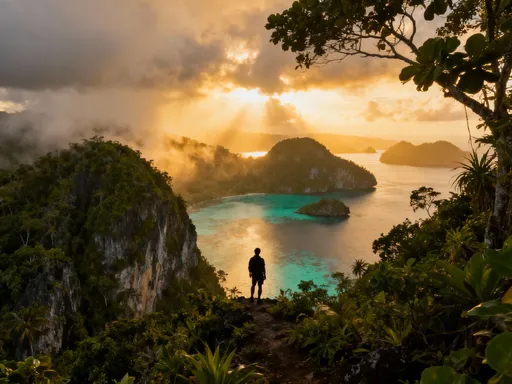
Koror, Palau, is more than just turquoise waters and jungle-covered islands—it’s a place where breathtaking viewpoints hide around every bend. I went searching for the most stunning panoramas and found beauty beyond imagination. But I also made some real rookie mistakes. From misleading trails to timing fails, here’s what you actually need to know to see Koror’s best views—without the regrets. The island’s dramatic limestone formations, emerald forests, and scattered islets create a living postcard at every turn. Yet, the true magic often lies off the beaten path, where silence replaces chatter and the horizon stretches endlessly. This guide shares not only the most rewarding vantage points but also the practical wisdom gained from experience—so your journey is as smooth as it is spectacular.
The Allure of Koror’s Natural Vistas
Koror, though small in size, holds an outsized presence in the world of island ecotourism. Nestled in the western Pacific, this lush island is surrounded by more than 250 Rock Islands—dome-shaped, jungle-covered limestone formations rising from the sea like ancient sentinels. The natural vistas here are shaped by millennia of erosion, coral uplift, and dense tropical growth, resulting in a landscape that feels both primordial and pristine. From elevated hilltops, visitors can witness panoramic scenes where the ocean shifts from deep sapphire to translucent aquamarine, and tiny islets appear suspended in liquid light. These views are not just visually arresting—they offer a deeper understanding of Palau’s unique geology and ecological richness.
What sets Koror’s viewpoints apart is their ability to connect the observer with the rhythm of the natural world. Early mornings bring a soft mist that drifts between the islands, slowly lifting as the sun climbs. At these moments, the silence is profound, broken only by distant bird calls or the gentle lap of waves against mangrove roots. The elevated trails provide not only physical vantage points but also mental clarity—offering space to reflect, breathe deeply, and appreciate the island’s quiet power. This connection is central to the Palauan way of life, where respect for nature is woven into daily customs and long-standing traditions.
For travelers, these panoramic experiences are often the most memorable parts of a visit. Unlike museum exhibits or guided tours, the viewpoints of Koror allow for personal interpretation and emotional resonance. Whether standing atop a windswept ridge or peering through a natural stone arch at a hidden lagoon, the sense of discovery is immediate and authentic. The island’s topography—steep hills, narrow ridges, and sudden drops into the sea—creates natural amphitheaters of light and shadow. Photographers, hikers, and casual sightseers alike find themselves drawn to these high places, not just for the scenery, but for the feeling of being present in a landscape that remains largely untouched by mass tourism.
Top Scenic Lookouts You Can’t Miss
While hidden gems abound, certain viewpoints in Koror have earned their reputation for good reason. Among them, the summit trail of Mt. Ngerchelchuus stands as the island’s most prominent natural landmark. At 242 meters, it is the highest point in Palau, and the hike to the top—though moderately challenging—offers unmatched 360-degree views. The trail begins near the village of Melekeok on Babeldaob Island, just a short drive from central Koror. Marked with wooden posts and occasional informational signs, the path winds through dense secondary forest, crossing small streams and rocky outcrops. The ascent takes approximately 45 minutes to an hour, depending on pace and rest stops, making it accessible to most visitors with average fitness.
Reaching the summit rewards hikers with a sweeping panorama: to the west, the vast expanse of the Philippine Sea; to the east, the maze of Rock Islands stretching toward Malakal Harbor. On clear days, the curvature of the Earth seems almost visible, and distant islets appear like brushstrokes on a canvas. The summit area is small but equipped with a simple shelter and a directional plaque identifying key landmarks. Early morning is the ideal time to visit—temperatures are cooler, humidity is lower, and the soft golden light enhances the ocean’s color. Sunset visits are also popular, though the trail should be descended with a flashlight due to the lack of artificial lighting.
Another must-see viewpoint lies near the Badrulchau Stone Monoliths, an ancient archaeological site believed to be over 1,000 years old. While the stones themselves are a cultural treasure, the elevated ridge leading to the site offers stunning coastal views. The trail begins at a marked parking area and ascends gently through shaded forest. Along the way, interpretive signs explain the significance of the megaliths and the oral traditions surrounding their origin. From the top, visitors can see Ngerkeai Bay and parts of the western coastline, where traditional fishing grounds remain active. The combination of history and scenery makes this location particularly meaningful, especially for those interested in Palau’s heritage.
For travelers seeking quick but rewarding stops, several roadside pull-offs provide excellent vantage points without requiring a hike. One of the most photographed is the overlook along the road to Ngerkeklau Village, where a simple concrete platform juts out over a steep cliff. From here, the view encompasses a dramatic bend in the coastline, with waves crashing against jagged rocks below. Another popular spot is the turnoff near the Palau Pacific Resort, where a short path leads to a grassy knoll with panoramic views of Malakal Island and the shipping channel. These locations are ideal for early risers or those with limited mobility, offering scenic rewards with minimal effort. However, visitors should exercise caution—some edges are unguarded, and the terrain can become slippery after rain.
The Hidden Gems Only Locals Know
Beyond the well-trodden trails lie a handful of secluded lookouts known primarily to residents and longtime guides. These spots are rarely marked on maps and often require local knowledge to access. One such location is a quiet hillside clearing on the southern edge of Koror Island, reachable via a narrow footpath behind a residential area near Airai. The climb is short but steep, and the trail is easy to miss without guidance. Yet, those who find it are rewarded with an unobstructed view of the southern Rock Islands at sunrise—a sight few tourists ever witness. The stillness of the early hour, the absence of crowds, and the deep sense of privacy make this place feel sacred.
Another lesser-known vantage point is a coastal bluff on the northern tip of Ngerkeklau Peninsula, accessible only by boat or a long, overgrown trail. Local fishermen sometimes use this spot to rest during their trips, and a few have shared it with trusted visitors. From the bluff, the ocean stretches uninterrupted toward Yap, and the sound of waves echoes against the limestone cliffs below. Because it lies on private land, access should only be attempted with permission and ideally with a guide. This underscores a broader principle: the most authentic experiences in Koror often come not from guidebooks, but from relationships built with the community.
Engaging with local guides is not only respectful—it is practical. Many hidden viewpoints are located on family-owned land or near culturally sensitive areas. A knowledgeable guide ensures that visitors do not inadvertently trespass or disrupt daily life. Moreover, these guides often share stories, legends, and ecological insights that enrich the experience far beyond what a solo traveler might discover. Their presence transforms a simple hike into a meaningful exchange. For families and older travelers, hiring a guide can also enhance safety, especially on trails with unclear markings or uneven terrain.
It’s important to approach these hidden spots with humility and care. The beauty of these places lies in their untouched quality, and increased foot traffic could threaten their integrity. Visitors should avoid posting exact GPS coordinates on social media, refrain from carving names or leaving marks, and never attempt to access restricted areas. By preserving the privacy and sanctity of these locations, travelers help ensure they remain available for future generations. The true reward of discovering a hidden viewpoint is not just the photo—it’s the knowledge that you’ve experienced something rare and responsibly shared.
Common Viewpoint Pitfalls First-Timers Make
Even the most scenic locations can fall short of expectations when basic mistakes derail the experience. One of the most frequent errors is assuming all trails are well-maintained and clearly marked. While major routes like Mt. Ngerchelchuus have some signage, many secondary paths rely on natural landmarks or word-of-mouth directions. Travelers who depend solely on memory or outdated online descriptions often find themselves lost or turning back due to overgrown vegetation. Another common issue is underestimating the tropical climate. Koror’s humidity averages 80% year-round, and temperatures regularly exceed 30°C (86°F). Hiking without adequate water, sun protection, or breathable clothing can lead to exhaustion or heat discomfort, especially during midday hours.
Timing is another critical factor. Many visitors arrive at popular lookouts around noon, when the sun is directly overhead and the light flattens the landscape. What should be a vibrant seascape can appear washed out in photographs, and the heat discourages lingering. Additionally, this is when tour groups tend to arrive, turning peaceful spots into crowded viewpoints. In contrast, early morning visits offer cooler temperatures, softer lighting, and a higher chance of spotting wildlife—such as fruit doves or monitor lizards—going about their routines. Sunset provides a different kind of beauty, with warm hues reflecting off the water, but descending dark trails without proper lighting is a safety risk.
Another often-overlooked mistake is setting unrealistic expectations. Some travelers arrive with images from professional photography accounts, not realizing that those shots were taken under ideal conditions—with perfect weather, long exposures, or drone technology. When the sky is overcast or the tide is high, the scene may look different than expected. Rather than feeling disappointed, visitors are encouraged to embrace the moment as it is. Each day brings a new version of the landscape—sometimes misty and mysterious, sometimes bright and bold. Flexibility and openness enhance the experience far more than rigid itineraries.
Navigation Challenges and How to Avoid Them
Navigating Koror’s trails presents unique challenges, particularly in remote or lesser-known areas. Signage is minimal, and many paths are not maintained by official tourism bodies. GPS signals can be unreliable due to dense canopy cover or rugged terrain, leaving travelers disoriented even with smartphone maps. This is especially true on Babeldaob Island, where roads are fewer and trails blend into the forest. Relying solely on digital navigation can lead to frustration or unsafe detours. Instead, a layered approach to navigation is recommended.
Before setting out, download offline maps using trusted applications such as Gaia GPS or Maps.me, which allow users to save topographic data for use without internet. These tools often include user-generated trail overlays that can supplement official information. However, even the best apps should be cross-checked with local knowledge. Hotel staff, tour operators, or friendly residents can confirm trail conditions, recent changes, or potential hazards. A five-minute conversation can prevent a two-hour wrong turn. For popular routes, printed trail guides from the Palau Visitors Bureau or eco-lodges can also provide reliable reference.
Another growing concern is the spread of unverified “secret spot” content on social media. While platforms like Instagram and TikTok have inspired interest in off-the-beaten-path locations, they often lack context. A photo of a breathtaking cliff may not show the dangerous descent, private property signs, or environmental damage caused by increased traffic. Some locations promoted online are illegal to access or ecologically fragile. Travelers should exercise caution and prioritize safety and sustainability over viral content. When in doubt, choose established trails or seek guidance from licensed operators. Responsible exploration means valuing preservation over popularity.
Environmental Etiquette at Sensitive Sites
Palau’s natural beauty is not just a tourist attraction—it is a living ecosystem protected by law and cultural tradition. The Palau Pledge, a mandatory conservation oath signed by all visitors upon entry, underscores the nation’s commitment to environmental stewardship. This pledge applies directly to viewpoint tourism: every footstep, photo, and interaction should leave no trace. Staying on marked paths prevents soil erosion and protects native plants, some of which are found nowhere else on Earth. Trampling vegetation or creating new trails may seem harmless, but repeated use can lead to long-term damage, especially on steep slopes where recovery is slow.
Proper waste disposal is equally important. Even biodegradable items like fruit peels can disrupt local wildlife diets or attract invasive species. All trash, including food wrappers and sunscreen containers, should be carried out and disposed of in designated bins. Single-use plastics are particularly harmful in island environments, where wind and tides can carry them into the ocean. Travelers are encouraged to bring reusable water bottles and containers to minimize waste. Additionally, reef-safe sunscreen should be used not only at beaches but on trails, as runoff from rain can carry chemicals into marine habitats.
At cultural sites like Badrulchau, visitors should refrain from touching or climbing on stone structures, using flash photography, or speaking loudly. These places are not just historical—they are spiritually significant to Palauan families. Respecting “no access” signs, even when they seem arbitrary, honors both legal boundaries and ancestral customs. The goal is not restriction, but preservation. When travelers act as stewards rather than spectators, they contribute to the sustainability of these places. Over time, mindful behavior becomes part of the travel experience itself—less about taking, more about giving back.
Maximizing Your View-Hunting Experience
To truly make the most of Koror’s viewpoints, a strategic and balanced approach is essential. Begin by aligning your itinerary with natural rhythms: schedule sunrise hikes for cooler temperatures and softer light, then follow with a boat tour to see the Rock Islands from sea level. This combination offers multiple perspectives—elevated panoramas and intimate water-level views—deepening your appreciation of the landscape. Pairing a morning trail with a visit to a local market or cultural center also enriches the journey, connecting natural beauty with human heritage.
Packing wisely enhances comfort and safety. Essential items include a wide-brimmed hat, quick-dry clothing, sturdy hiking sandals or trail shoes, at least one liter of water per person, and a lightweight rain jacket—sudden showers are common, even on sunny days. A small first-aid kit with antiseptic wipes and bandages is prudent, especially for families. For photography, a polarizing filter can reduce glare on water surfaces, and a portable phone charger ensures devices remain powered throughout the day. However, the most valuable tool is patience. Rushing from one spot to the next diminishes the experience; lingering allows the landscape to reveal its subtleties.
A flexible schedule is key. Weather in the tropics can shift quickly, and trail conditions may change after rain. Allowing buffer time for delays or spontaneous discoveries keeps stress low and enjoyment high. For older travelers or those with limited mobility, combining shorter walks with scenic drives or guided van tours offers a comfortable alternative. The goal is not to conquer every viewpoint, but to engage meaningfully with a few. Over time, the act of seeking views becomes less about capturing the perfect photo and more about cultivating presence—about standing quietly, breathing deeply, and feeling connected to a place that has existed long before us and will endure long after.
Chasing views in Koror is more than ticking off spots—it’s about connection, awareness, and learning from missteps. When done right, it leads to moments of pure awe. With better preparation and respect for the land, your journey through Palau’s panoramas can be as meaningful as it is unforgettable.